
7 — Seven Deadly Sins
Seven Deadly Sins is a collection inspired by the seven deadly sins. Each painting represents one sin and is inspired by a different song that evokes its emotional essence, creating a dialogue between music, mythology, and human nature.
Each figure is based on a person I know in real life, portrayed through the lens of a Greek mythological character. The body itself becomes a map of symbolism: specific body parts, colors, and objects represent different aspects of the seven deadly sins.
Every section of the body contains symbols and clues connected to the life, personality, experiences, and stories of the person portrayed. Some of these details may be immediately visible, while others are meant to be discovered. The paintings become a visual puzzle—an invitation to look closer and perhaps discover who the person is and what their story might be.
Music is also an essential part of the collection. Each painting has a song connected to it, chosen to capture the emotion and energy of the corresponding sin. I invite the viewer to listen to the song while experiencing the painting, allowing the music to become another layer of the story.
Through this work, I explore how our emotions, ambitions, and desires can both elevate us and lead us toward our downfall. The seven sins are not simply good or bad—they are human experiences that reveal different sides of who we are.
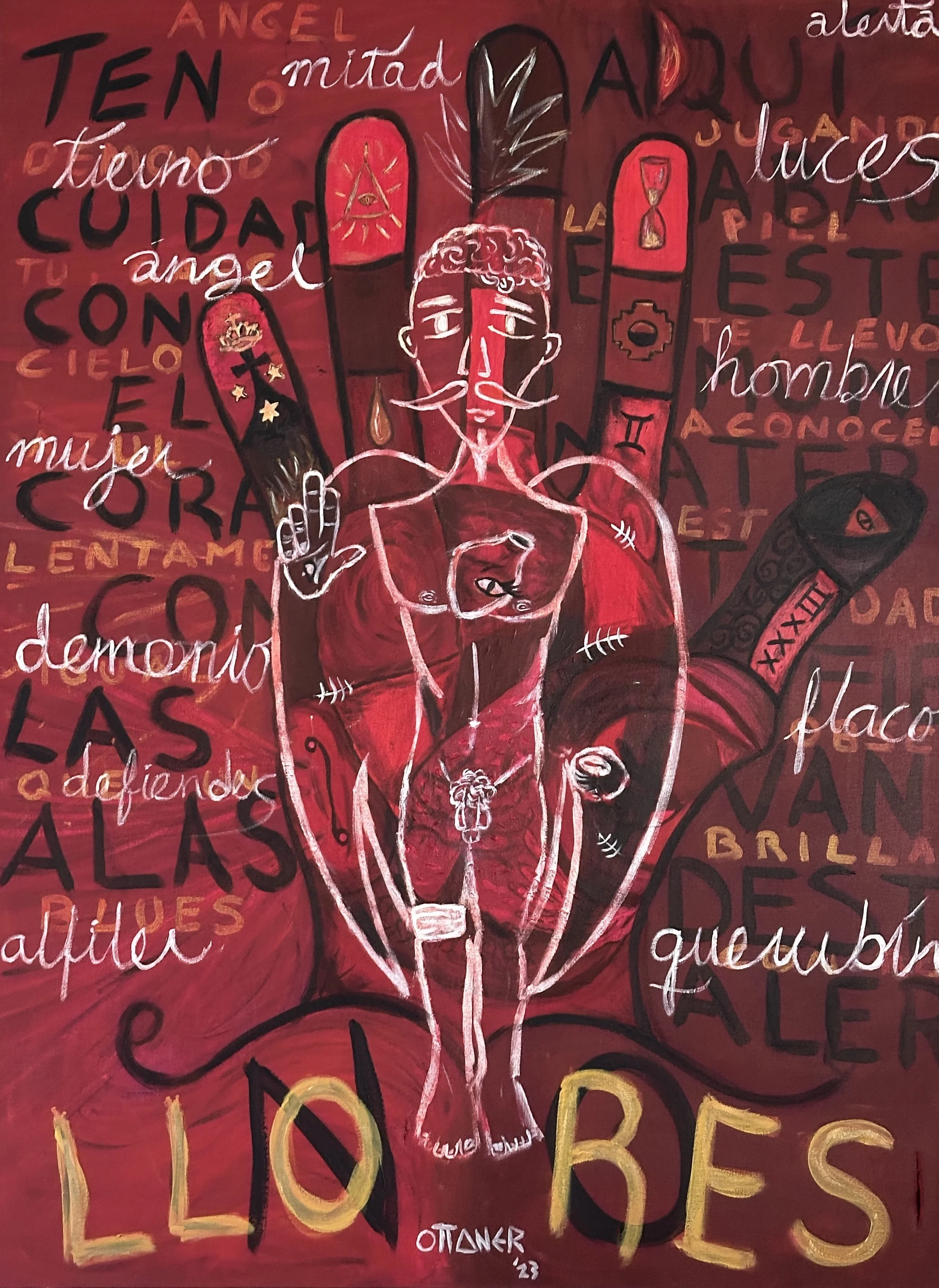
Cuidado con el Corazon / Wrath / Ira
This painting was inspired by the song Cuidado con el Corazon by Alejandra Guzmán. I connect deeply with its lyrics because they reflect my own duality as a Gemini—the constant balance between opposing emotions and desires.
This piece became the starting point for a larger series exploring the Seven Deadly Sins. Each painting in the series is inspired by a different song that evokes the essence of a particular sin, creating a dialogue between music, mythology, and human nature.
The central figure is Icarus from Greek mythology, a symbol of ambition, vulnerability, and the consequences of losing oneself to overwhelming emotions. I chose to portray him as a reflection of my own inner struggles and contradictions.
The dominant red tones represent the sin of wrath, while the heart symbolizes greed—not only as the desire for material things, but also as the longing to possess love, affection, and what cannot truly be owned. Through this work, I explore how our emotions, ambitions, and desires can both elevate us and lead to our downfall.
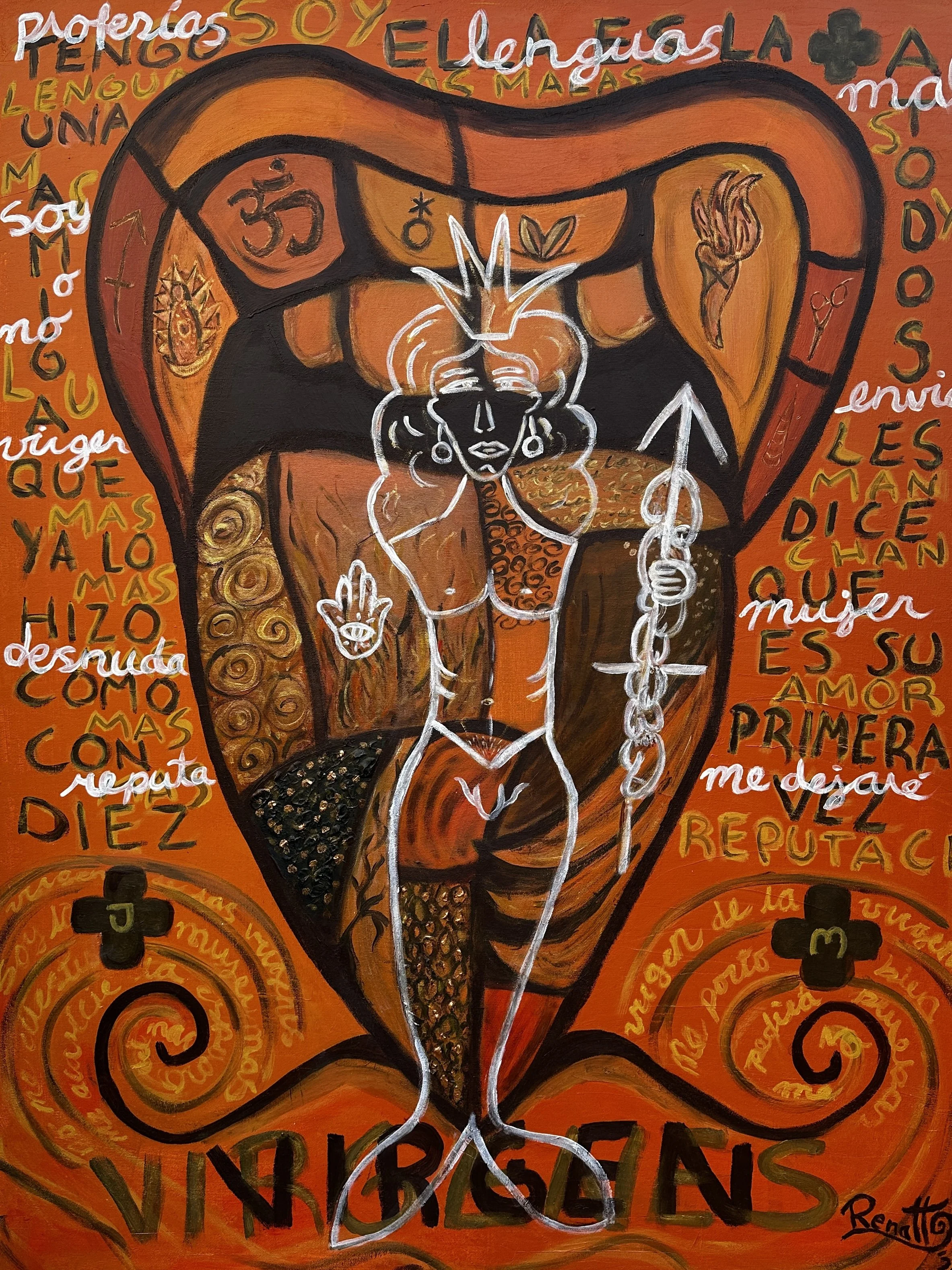
Virgen de Las Virgenes / Gluttony / Gula
Virgen de las Vírgenes explores the sin of gluttony through the symbolism of an oversized mouth and tongue, representing an insatiable hunger that extends beyond food into desire itself. At the center of the painting is a non-binary mermaid, a mythical figure that symbolizes fluidity, transformation, and the freedom to exist beyond traditional binaries.
Inspired by the song Virgen de las Vírgenes by Gloria Trevi, the painting reflects the song’s portrayal of someone who is never fully satisfied with their sexual experiences, approaching each new encounter with the same intensity and excitement as if it were the first. In this work, gluttony becomes more than physical excess—it represents an endless craving for intimacy, validation, and emotional fulfillment. Through the non-binary mermaid, the painting invites viewers to reflect on how desire can be both liberating and consuming, revealing the beauty and vulnerability of wanting more than can ever be fully attained.
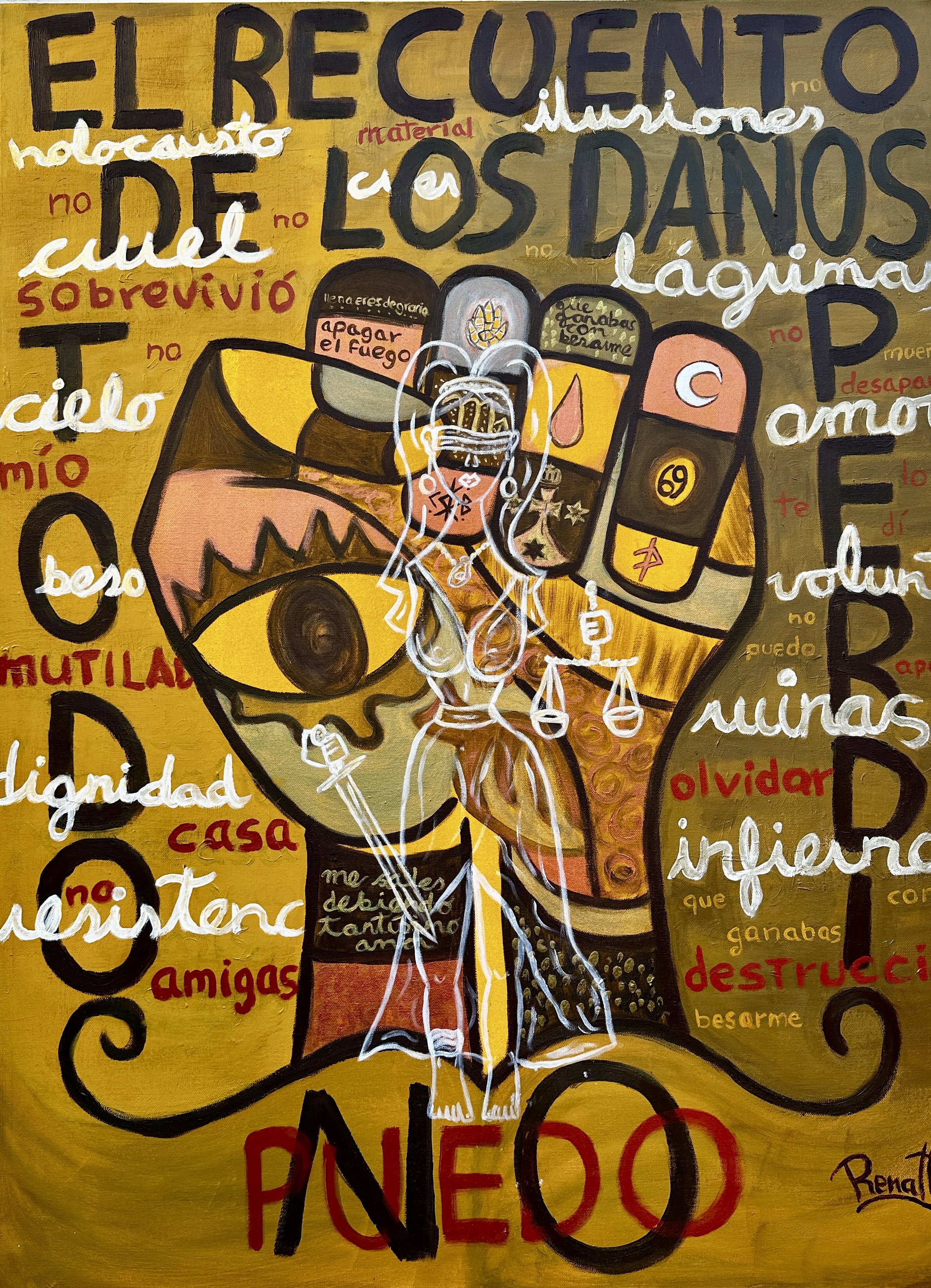
El Recuento de los Danos (Greed)
El Recuento de los Daños explores greed through the idea of emotional avarice—the desire to possess, suppress, and control another person's feelings. Rather than focusing on material wealth, this painting examines the damage caused when someone attempts to dictate how another person should feel, denying them the freedom to express their emotions. Inspired by the song El Recuento de los Daños by Gloria Trevi, the work reflects on the emotional scars left by manipulation, control, and repression. At the center of the composition is Themis, the Greek goddess of justice, whose presence symbolizes the search for balance and the right to emotional truth. The clenched fist represents both oppression and resistance: it embodies the force used to silence emotions while simultaneously becoming a symbol of strength, resilience, and the determination to reclaim one's voice.
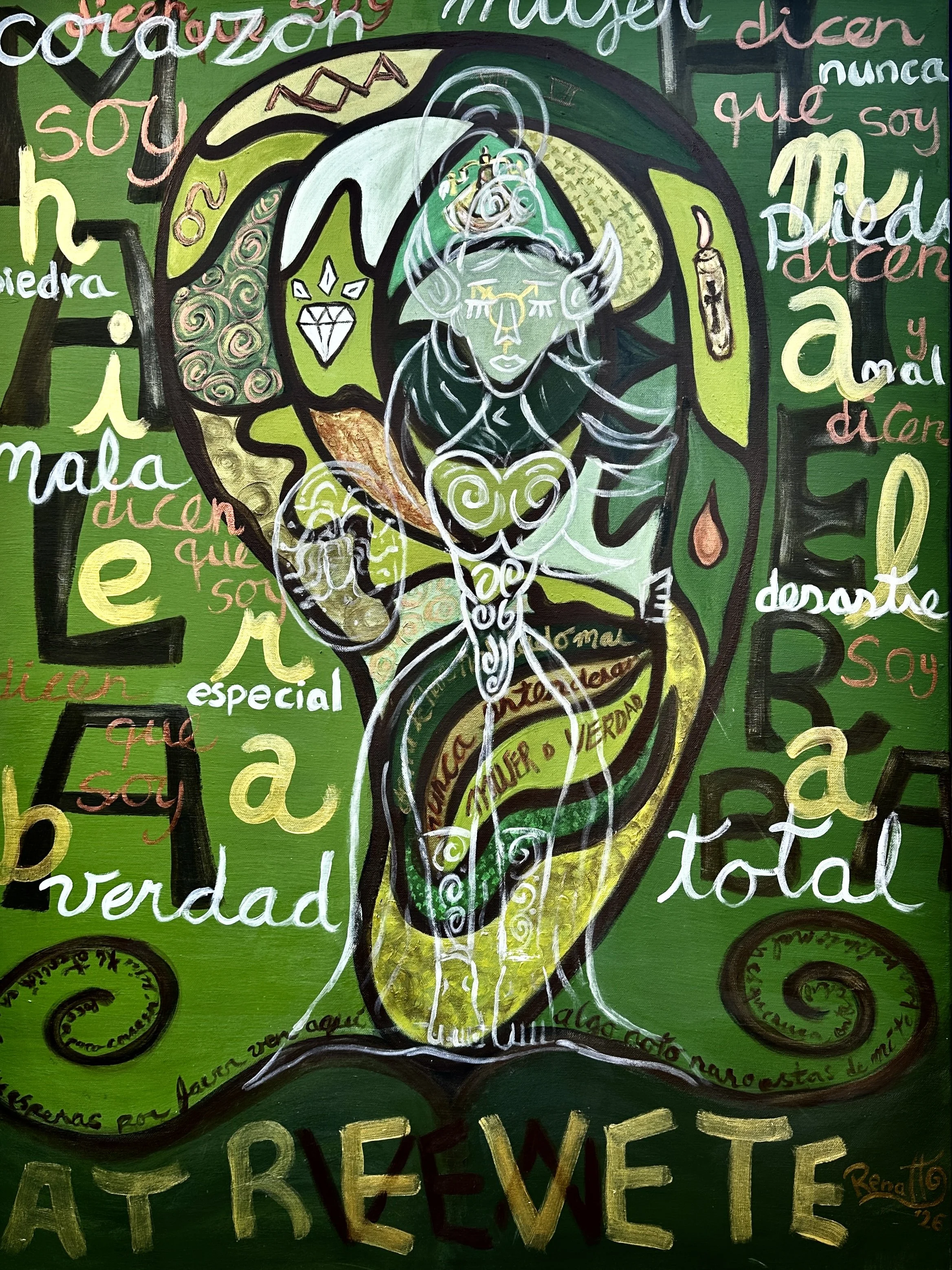
Inspired by the song Mala Hierba by Alejandra Guzmán, this painting explores the sin of envy through gossip, criticism, and the resentment that often accompanies another person's success. The central figure is Minerva, the Roman goddess of wisdom and war, who symbolizes resilience, courage, and the strength to remain steadfast in the face of jealousy. Rather than being defined by the voices around her, Minerva stands as a warrior, representing women who continue to move forward despite judgment and envy. The painting celebrates perseverance and reminds us that true strength comes from staying grounded in one's own worth.
"Mala Hierba" (Envy)
"Mirala Miralo" (Lust)
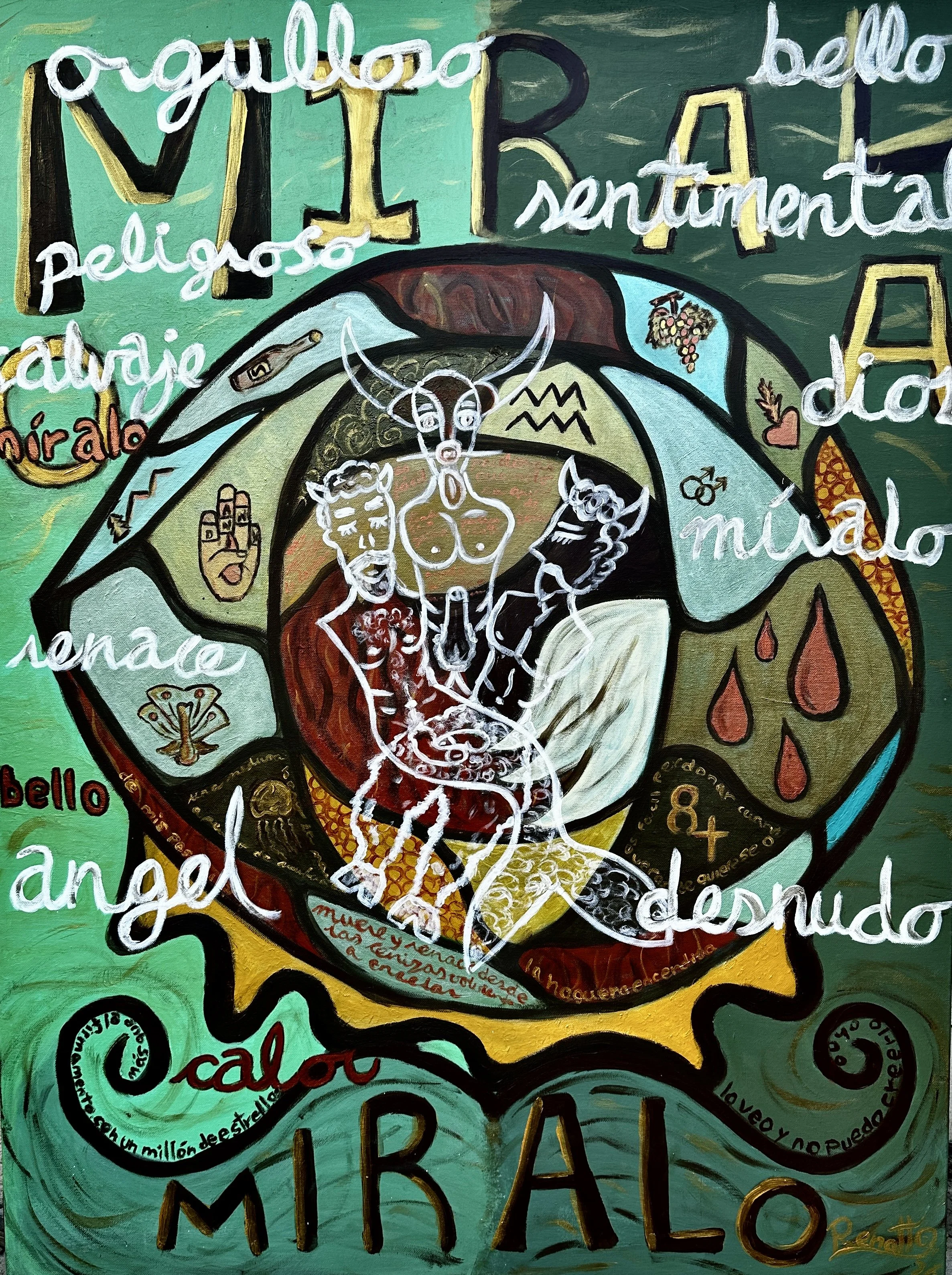
Inspired by the song Mírala, Míralo by Alejandra Guzmán, this painting explores the sin of lust through the symbolism of a watchful eye, representing desire, temptation, and voyeurism. At the center of the composition, three mythological beings engage in an intimate encounter, embodying the complexity and fluidity of attraction. The eye serves as both witness and participant, suggesting that lust is fueled not only by physical desire but also by curiosity, fantasy, and the act of looking. Through mythology and symbolism, the painting invites viewers to reflect on the many ways desire shapes human experience.
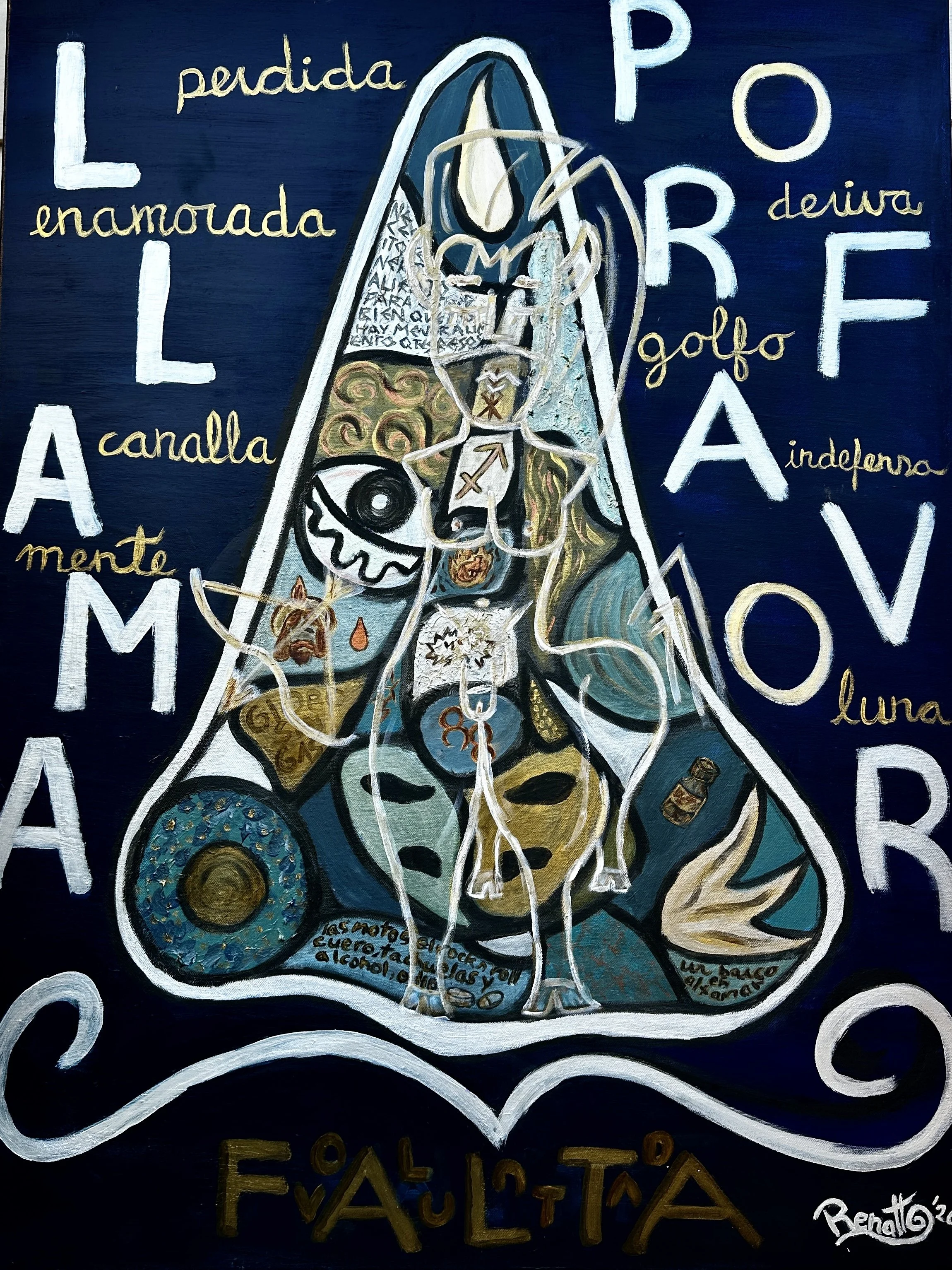
Inspired by the song Llama por Favor by Alejandra Guzmán, this painting explores sorrow, the ancient sin later replaced by sloth among the Seven Deadly Sins. The composition features a nose supported by two legs and a spine, symbolizing the physical burden of sadness and the struggle to keep moving forward. A centaur, a mythological creature often associated with untamed and destructive instincts, represents the internal conflict between despair and resilience. The painting reflects on mental health, exploring how grief, hopelessness, and emotional exhaustion can leave us feeling unmotivated and disconnected, while reminding us of the strength required to continue despite those struggles.
"Llama por Favor" (Sorrow)
"Reina de Corazones" (Pride)
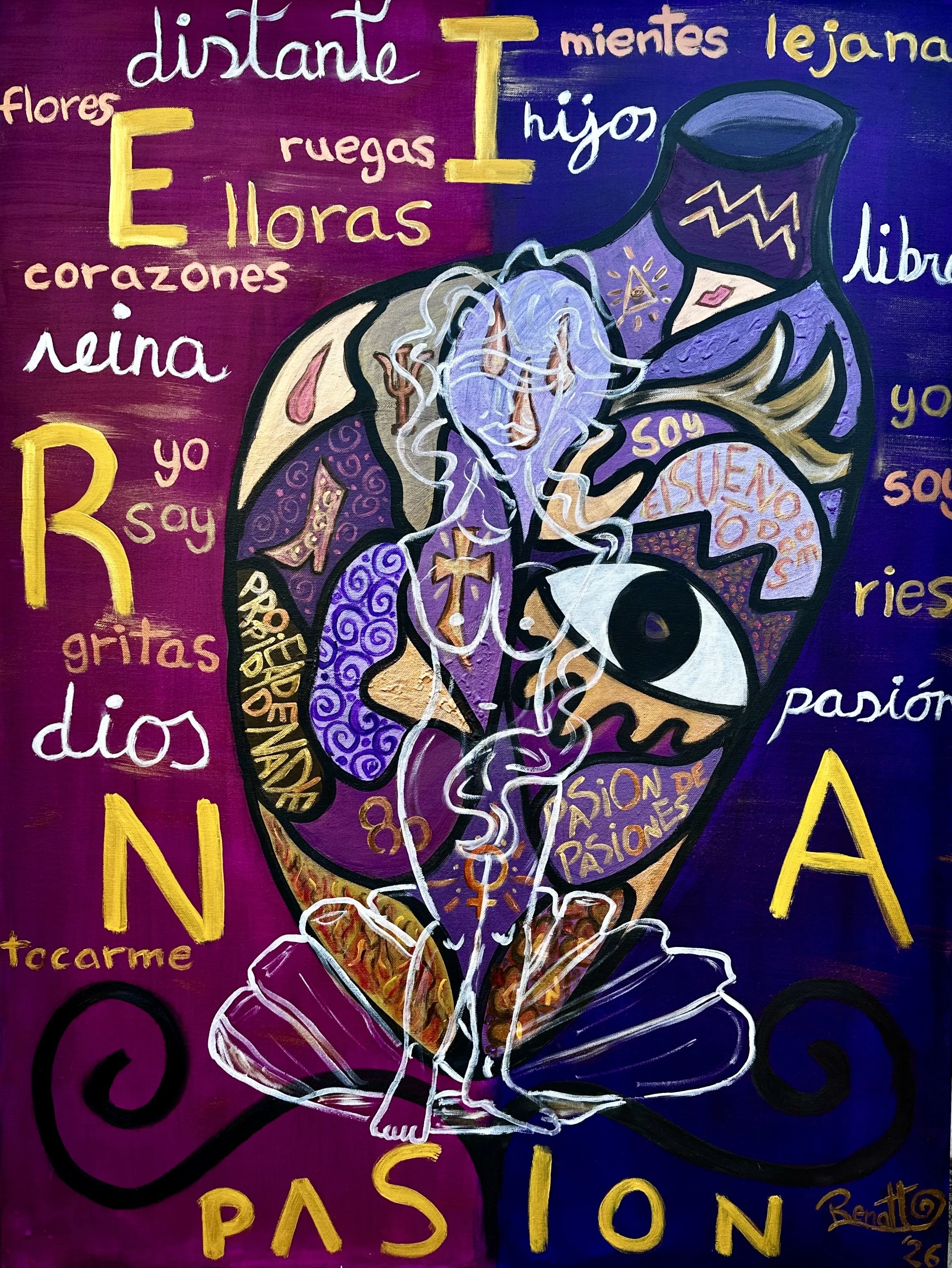
“Reina de Corazones” (Pride), represented by Aphrodite, is the most beautiful of the goddesses. Her perfection became both her gift and her burden, as admiration surrounded her but true connection became distant and unreachable. She is the dream of all who look upon her, a vision of beauty, grace, and desire, yet she belongs to no one. She cannot be possessed; she exists as a symbol of divine beauty, eternal elegance, and the freedom of the heart.